
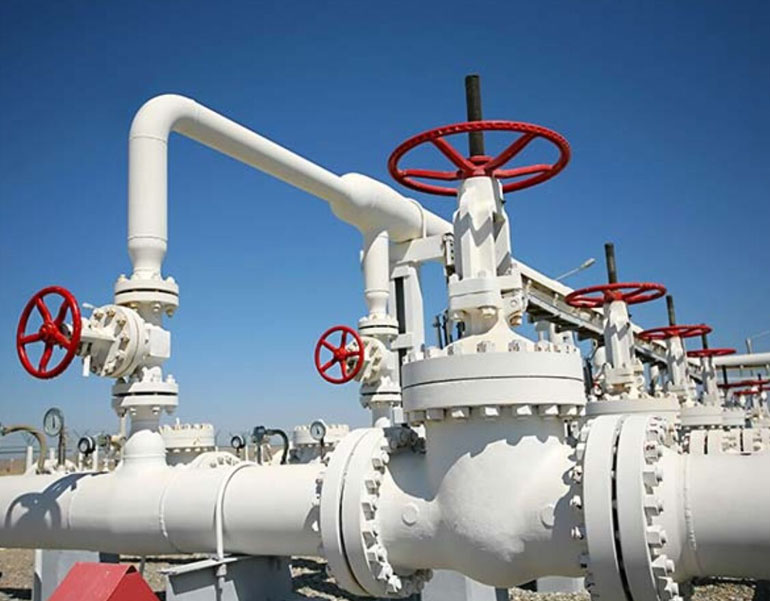
Gate valves
Gate valves respond slowly, requiring numerous turns of the handwheel, to go from fully open to fully closed. The disks are made in either a solid or flexible wedge disk. Flexible disks were developed to overcome sticking on cooling in high-temperature service and minimize operating torque. High-pressure service of large sizes is usually cheaper than plug or ball.
Gate valves are more commonly used in refineries and petrochemical plants where pressure remains relatively low, but temperature may be very high. Gate valves are used less in upstream oil and gas production facilities due to high operating pressures, long opening/closing times, and severe environmental conditions when operating in marine atmospheres.
The gate valve is a block valve. Due to its design, it cannot control flow; even at the beginning of opening, erosion of the seat and disk occurs, resulting in the destruction of the tight faces.
The gate valves used in the mainlines carrying oil or gas must be of full bore or through conduit design to enable smooth passage of scrapers or pigs used for cleaning or monitoring pipelines. Such gate valves are referred to as full bore or through conduit gate valves.